Raising cattle and goats in South Texas is a way of life that comes with plenty of rewards, and more than a few steady challenges. One of the biggest threats to herd health in this region is parasites in cattle and goats. The warm, humid climate across the region gives these pests the perfect conditions to survive and spread, putting herds at risk for weight loss, poor body condition, reduced milk production, and even serious illness if infestations go unchecked.
Parasites steal nutrients and energy from livestock, weakening their immune systems and slowing growth. They can also interfere with breeding and lower overall productivity, which directly affects your bottom line.
Effective livestock parasite control keeps your livestock strong and your herd profitable. By understanding which parasites are most common in local herds and how to stop them early, you can prevent outbreaks and protect your investment
At Sinton Vet Clinic, we work directly with our local ranchers to manage internal and external parasites through preventive care, fecal testing, and customized herd health plans. With the right approach, you can keep your cattle and goats healthy, your pastures balanced, and your ranch running at its best.
Why Parasite Control Matters for South Texas Ranchers
Parasites might be small, but their effect on herd performance can be significant. Once infestations take hold, livestock begin to lose condition. You may notice slower weight gain, dull coats, and a drop in milk production. Breeding animals often take longer to settle, and young calves or kids may fail to reach growth targets. These changes hurt productivity and cut into ranch profits over time.
The real issue isn’t just the parasites themselves, but the stress they create on the entire system. They take the nutrients that should fuel growth and immunity, leaving animals weaker and more susceptible to other illnesses. Even light infestations can drag down herd averages, especially when weather or pasture conditions are already challenging.
Consistent prevention and monitoring make all the difference. Rotational grazing, targeted deworming, and routine diagnostic testing help catch problems early and reduce pasture contamination. With the right veterinary guidance, you can keep parasite levels under control, protect herd health, and maintain strong returns from every animal you raise.
Common Parasites in Cattle
Parasites in cattle can affect everything from growth to reproduction, and understanding how they operate helps ranchers catch problems before they spread. Some parasites cause visible irritation, while others quietly disrupt digestion and blood health. Internal parasites such as roundworms, strongyles, and liver flukes, along with external pests like ticks, horn flies, and lice, are among the most frequent challenges in Texas herds.
Internal Parasites
Internal parasites live in the stomach, intestines, or liver and compete with cattle for nutrients. Roundworms and strongyles slow weight gain and lead to rough coats and weakness, especially in young animals. Liver flukes thrive in low, damp pastures where moisture supports their life cycle, damaging the liver and lowering feed efficiency. Regular livestock fecal checks and targeted deworming are essential parts of any herd health plan that follows evidence-based parasite management. Ranchers who stay on top of internal parasite control see better feed conversion, faster recovery, and stronger overall performance.
External Parasites
External parasites are easier to spot but can be just as harmful. Horn flies bite repeatedly throughout the day, irritating cattle and causing them to group tightly instead of grazing. Face flies spread pinkeye and other bacterial infections, while ticks carry diseases that can devastate a herd. Lice are common in cooler weather, leading to rubbing, hair loss, and unnecessary stress. Consistent fly control, clean pens, and good pasture management help limit exposure and protect herd productivity.
A balanced cattle parasite control program addresses both internal and external threats through routine monitoring, record keeping, and veterinary guidance. Healthy, parasite-free cattle make better use of feed, maintain higher fertility rates, and stay in better condition throughout the year.
Common Parasites in Goats
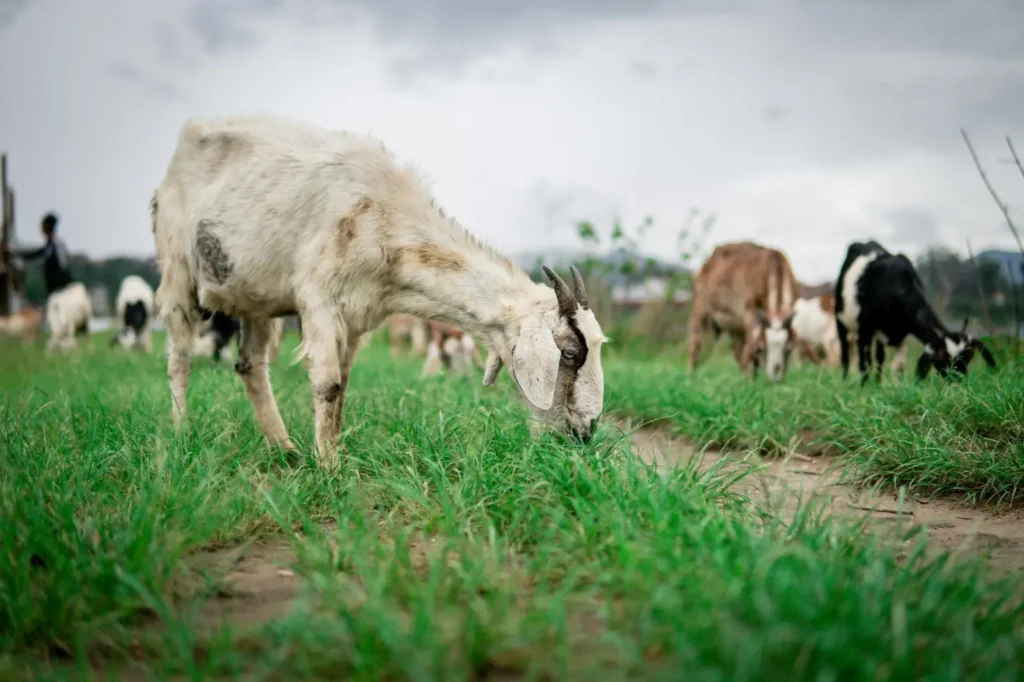
Parasites in goats are one of the leading causes of poor body condition and sudden health declines in herds. Goats are especially sensitive to internal parasites, which can multiply quickly in warm, humid conditions. Without consistent monitoring and treatment, infestations can spread fast and lead to major losses, particularly among young or stressed animals.
Internal Parasites
The barber pole worm (Haemonchus contortus) is one of the most dangerous internal parasites in goats. It attaches to the stomach lining and feeds on blood, leading to anemia, fatigue, and swelling under the jaw known as “bottle jaw.” Another common issue is coccidiosis, which damages the intestines and causes diarrhea and stunted growth in kids. Goats build parasite resistance differently than other livestock, so control programs must include careful rotation of dewormers, pasture management, and regular testing. Producers who follow proven prevention programs usually see stronger herd performance and fewer losses in young animals.
External Parasites
External parasites in goats are most often mites, lice, and ticks, each with their own set of problems. Mites burrow into the skin and cause intense itching, scabs, and patchy hair loss that can spread quickly through a herd. Lice live on the surface of the skin and thrive in cooler weather, causing constant rubbing and irritation that leads to thin coats and open sores. Ticks attach to the ears, neck, or underbelly and can cause swelling, anemia, and even infection at the bite site. Severe infestations not only make goats restless and uncomfortable but can also weaken immune systems, making them more vulnerable to other diseases.
Goats require more frequent monitoring for parasite problems than cattle, as they tend to show signs sooner and can decline rapidly if not treated. Effective goat worm prevention combines strong nutrition, pasture management, and routine veterinary care to keep herds healthy and productive through every season.
Prevention and Management Strategies for Livestock Parasite Control
Knowing how to prevent parasites in cattle and goats is the key to long-term herd health. The most successful programs for livestock parasite prevention in Texas focus on consistent parasite management and build resilience into every part of daily care.
Pasture Rotation for Parasite Prevention
Rotating pastures is one of the simplest and most effective forms of livestock parasite control. Moving animals regularly breaks the parasite life cycle and lowers exposure to contaminated grass. Giving pastures time to rest and recover allows sunlight and dry conditions to kill larvae before cattle or goats return.
Targeted Deworming Programs
Parasite resistance is a growing concern across the livestock industry. Instead of deworming on a fixed calendar, base treatments on fecal testing and visible signs of stress. This targeted approach keeps products effective longer and reduces unnecessary chemical use. Always rotate classes of dewormers and dose animals accurately for their weight to maximize results.
Nutrition and Herd Condition
Good nutrition supports natural parasite resistance. Animals that receive adequate minerals, quality forage, and clean water are better able to fight off internal parasites. Balanced diets also speed recovery for animals recently treated for parasite infestations.
Sanitation and Facility Management
Clean, dry environments are essential for parasite prevention in livestock. Parasite eggs thrive in wet, dirty bedding and crowded pens. Keep shelters dry, remove manure regularly, and ensure proper drainage to reduce breeding areas for flies, mites, and other pests.
Observation and Record Keeping
Regular observation is a core part of effective parasite management. Watch for dull coats, reduced appetite, or slower weight gain, and record any treatments or pasture rotations. Over time, good records make it easier to spot patterns, predict parasite pressure, and plan ahead.
When these strategies are applied together, parasite control becomes second nature rather than a seasonal scramble. Consistency is what protects your herd and keeps both cattle and goats productive throughout the year.
When to Call a Veterinarian
Most parasite problems can be managed with steady herd care, but there are times when professional help makes all the difference. Working with a veterinarian experienced in parasite management for ranch animals ensures treatments are accurate and tailored to your operation.
Contact your veterinarian if you notice any of the following warning signs in your cattle or goats:
- Sudden weight loss or poor body condition despite regular feeding.
- Pale gums or eyelids, indicating possible anemia.
- Swelling under the jaw (“bottle jaw”) or persistent diarrhea.
- Reduced milk production or lower breeding performance.
- Lethargy, rough coats, or general weakness affecting several animals.
Heavy parasitic infestations often spread quietly through a herd before symptoms become obvious. A veterinarian can perform fecal testing, confirm which parasites are present, and recommend treatments that fit your operation’s needs. Getting expert input early prevents major losses, protects herd health, and keeps your pastures cleaner over time.
If you suspect parasite issues in your cattle or goats, don’t wait until they become widespread. Schedule a consultation or on-site visit with your livestock veterinarian to evaluate your herd and adjust your livestock parasite control plan before the next season hits.
Protecting Your Herd with Year-Round Parasite Control
Parasites are a constant challenge for ranchers, but they don’t have to limit your herd’s potential. With steady pasture rotation, targeted deworming, and ongoing veterinary support, it’s possible to control parasite pressure and keep animals performing their best. Regular herd checks and fecal testing help detect problems early, saving both time and money in the long run.
Sinton Vet Clinic partners with local cattle and goat owners to design parasite control plans that fit each operation’s size, land, and grazing patterns. Our team provides testing, guidance, and management plans that keep herds healthy through every season.
If you’ve noticed signs of parasites or want to strengthen your herd parasite control and prevention plan, schedule an appointment or request a farm call today. The right approach to parasite control in cattle and goats will keep your livestock healthy, productive, and ready for whatever the season brings.